Last updated: June 2026

Author: Rob Lambert
Editor at Arbtech, Rob is a content specialist who manages our ecology and arboriculture services copy to ensure it is accurate, up to date, and insightful for current and future clients.
Our licensed ecologists are situated across the UK and capable of conducting a broad range of protected species surveys. Examples of the protected species surveys we offer include for bats, great crested newts, birds, badgers, reptiles and more. For a no-obligation quote, get in touch today.



UK’s #1 bat surveyors with hundreds of five-star reviews. Every single year, over 5,000 people choose Arbtech for bat surveys to support planning, from a phase 1 preliminary roost assessment (PRA) to phase 2 bat emergence surveys. Get in touch today for a free quote.
Find Out MoreOur ecologists are licensed, trained and qualified to inspect your site or property for barn owls, and with our help, we can satisfy UK laws, confirm or deny barn owl occupancy and support applications for planning permission.
Find Out MoreBirds can have a significant effect on a development and negatively impact planning applications. To appease the local planning authority, we can do a fast bird survey and mitigation plan to get your project moving.
Find Out MoreOur newt surveys include Habitat Suitability Index (HSI) Surveys, Phase 2 Surveys and eDNA Surveys to boost your prospects of achieving planning permission.
Find Out MoreAt any point that a suspected or proven dormouse presence has the potential to affect your development plans, Arbtech can conduct hazel dormouse surveys using a number of survey methods including nest boxes, nest tubes and nut searches.
Find Out MoreIncluding a prior desk study and a physical inspection for field signs, our water vole surveys account for evidence of water vole habitat on your development site, helping you to submit a viable planning application.
Find Out MoreDesigned to identify, assess and mitigate for reptiles on your site, our reptile surveys will meet the requirements of your local planning authority and facilitate your project to move forwards.
Find Out MoreOur experts have many years of experience with breeding bird surveys. Please get in touch for your free quote.
Find Out MoreOur otter surveys enable us to undertake extensive assessments before creating mitigation and compensation measures to support otter populations and allow your development to continue.
Find Out MoreOur ecology team is capable of conducting a badger survey in any part of the UK, including both phase 1 and phase 2 assessments. For a free quote, get in touch and provide us with details of your development site and planning project.
Find Out MoreA native species of crayfish known as the white-clawed crayfish could be on your development site, affecting your plans. See if you need a white-clawed crayfish survey by speaking to Arbtech today.
Find Out MoreHabitats of various invertebrate species can appear on development sites, and if they go unnoticed, harming the priority species will affect planning decisions, leading to fines, delays and issues with getting planning consent. An invertebrate survey instead allows your development to move forward without any issues.
Find Out MoreA red squirrel survey will come either by itself or in response to an earlier ecological assessment, with the results and measures helping with red squirrel conservation efforts as well as the developer’s need for planning consent.
Find Out MoreAmong other small mammals, dormice, water voles, red squirrels and otters feature throughout the country, leading to a need for mammal surveys if they appear on a development site and impact planning applications.
Find Out MoreOur friendly quote team can answer your questions and provide your quote quickly. Get in touch for your free, no obligation quote.

We will take your details and email you a quote explaining everything you need to know. We will also send a booking form along with your quote.

Complete the booking form and email it back to us. We'll then arrange a date for your survey and get to work.

Once your survey is complete we will write your report quickly and send it over to you when payment is made.
Last updated: June 2026
Editor at Arbtech, Rob is a content specialist who manages our ecology and arboriculture services copy to ensure it is accurate, up to date, and insightful for current and future clients.
If you are planning a development, your local council will likely require a protected species survey to ensure wildlife like bats, great crested newts or nesting birds aren’t harmed.
Surveys for protected species are a legal requirement under UK law, and skipping them can lead to costly delays or fines.
How we help you:
Expert Assessments: Our licensed ecologists conduct habitat surveys to identify if protected species are present on your site.
Simple Reports: We provide clear, professional reports that include the specific mitigation plans you need to satisfy your local planning authority.
UK-Wide Coverage: Whether you need a bat emergence survey or a great crested newt eDNA test, we have experts ready to start across the country.
Planning Guarantee: We are the only consultancy that offers a money-back guarantee on your planning permission if you follow our advice.
Before you begin any physical work on-site, it is vital to check the ecological calendar. Many surveys are seasonal – for example, bat activity surveys generally happen between May and September – so we recommend getting your quote early to avoid missing these windows.
Use our expert team to simplify the process and keep your project on track.
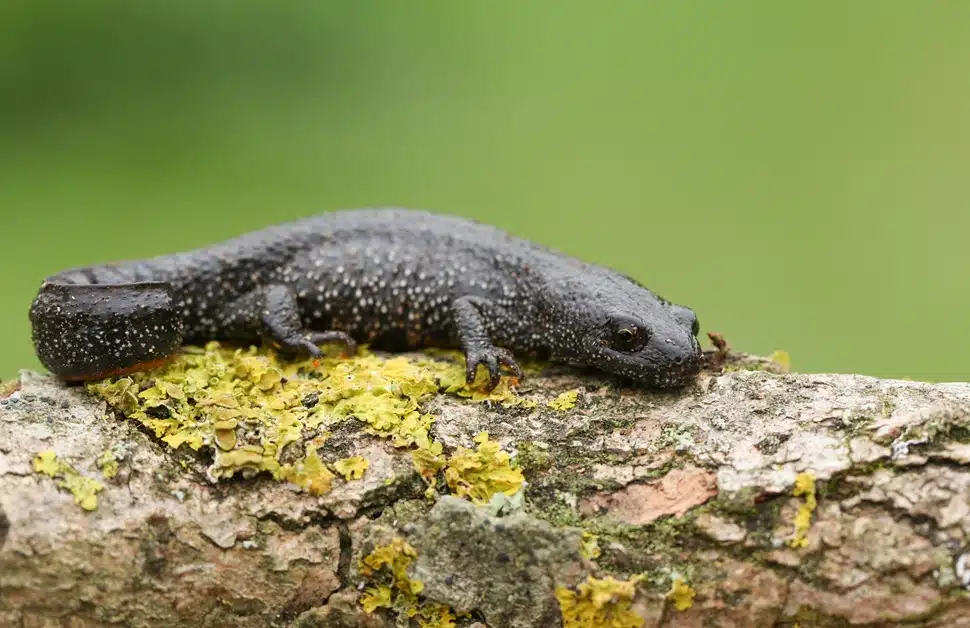
On any development scheme in the UK, you are likely to cross paths with protected species, and it could be a problem for you because your local planning authority will consider nature when it comes to reviewing your plans and think about granting planning permission.
If there’s no sign of consideration for the natural environment, you could see delays or additional costs in your planning project. Instead of that, we would recommend getting expert advice from our team, which will see you fall within relevant legislation and put you on the right path towards smooth planning decisions.
Certain types of protected animals and protected plants are safeguarded because they are important to our environment.
Each species is protected by law, primarily the Wildlife and Countryside Act 1981 (Schedule 5) and the Conservation of Habitats and Species Regulations 2017 Schedule 2.
Laws and definitions surrounding the animals and plants that are European protected species stem from the habitats directive.
Many species, ranging from mammals to mosses, are covered by UK environmental law.
Wild birds have universal protection. Other important species are listed in the Wildlife and Countryside Act (WCA) and protected under European Protected Species (EPS) laws.
All species listed as an EPS or within the WCA are of primary importance; their vulnerable numbers making them priority species.
Among the species listed below, you will find the most common categories of wildlife:
Mammals including bats, water vole, hazel dormouse, red squirrel.
Wild birds.
Invertebrates including white-clawed crayfish and the stag beetle.
Reptiles and amphibians including great crested newts, adders and Natterjack toads.
Marine species such as common sturgeon, basking sharks, vendace.
Plants, lichens and fungi such as Fen Orchid Lady’s Slipper, bluebell.
You can also check out our protected species list page for a more comprehensive list.
Our ecological consultancy believes in the importance of conserving nature and we work to protect threatened species throughout the UK.
It is in the public interest to preserve our native species, and developers are legally obligated to contribute to this effort in the way they carry out planning projects.
By protecting ecosystems, we can ensure clean water and healthy air all over the country, contributing to the living conditions of wildlife and humans alike.
Our work helps the environment by establishing new habitats for wildlife affected by development, habitat enhancement schemes on areas damaged or no longer suitable, water habitat conservation and support schemes for veteran trees.
All of our services are provided by ecologists who are licensed and follow strict industry standards. Part of this involves bearing in mind the standing advice from statutory bodies and the instructions from active laws.
Below, we’ve outlined the laws and organisations that work behind the scenes to defend endangered wildlife:
These include The Badgers Act (Protection of Badgers Act 1992); Conservation of Habitats and Species Regulations 2017; Habitats Regulations; Wildlife and Countryside Act 1981 (as amended).
Protection for Endangered Species comes from Natural England, Natural Resources Wales, NatureScot, Northern Ireland Environment Agency (NIEA), The Local Authority, The Relevant Statutory Body.
You might already have a plan for your proposed development site, but the absence or likely presence of protected species can cause adverse impacts to your timeline.
The solution to bridging the gap between your planning project and the law is to complete protected species surveys, ensuring compliance before you start the development works.
The protected species survey inspects a development site for evidence of a particular type of safeguarded wildlife. Also known as a habitat survey, it starts with an initial assessment of the survey area to determine if there is suitable habitat for a protected species before going on to establish the presence or likely absence of them.
The reasons for needing a protected species survey include wildlife presence, local authority instructions, past records of a species being present or the results of a previous survey.
Protected wildlife species surveys can be carried out for badgers, barn owls, bats, birds, dormice, invertebrates, newts, otters, red squirrels, reptiles, water voles and white clawed crayfish.
Your local planning authority will ask for a survey before even thinking about granting planning permission when there is a considered chance of a protected species being present.
For instance, it could include whenever a development could affect man-made structures like old barns, habitats like ancient woodland or dense vegetation, and water bodies that could support aquatic species.
Other examples of features that could trigger a site assessment include:
From start to finish, our team follows industry standards and guidelines according to best practice during any and all surveys we conduct.
A lot goes into correctly carrying out a protected species assessment, such as only undertaking them at the right time based on the species, only providing them when surveys are required, creating a suitable mitigation strategy, producing effective compensation measures, and meeting any specific mitigation licence conditions.
In an attempt to simplify the process, we’ve mapped out the steps below, as well as other considerations, such as the importance of a report and the potential need for a development licence:
The core survey process generally follows these steps:
Desk Study Work
Starting with desk-based research to review all existing data and records about the site, focusing specifically on any current or past logs of species with protected status occupying the locality.
Field Survey
Moving across to a physical inspection of the site, with universal tasks like a habitat suitability assessment, as well as different exercises based on the specific type of wildlife, such as a calculation of the habitat suitability according to the HSI index, for example, in the case of great crested newts.
Targeted Methods
Using different techniques and approaches depending on the type of wildlife, such as a preliminary roost assessment for bats, bottle trapping methods for newts, collecting water samples for aquatic invertebrates, leaving man-made refuges for reptiles, searching feeding stations for voles, installing nesting facilities for dormice, or holding bait marking badger surveys.
Regardless of which species you’re working with, a protected species survey will always finish with the ecological consultant creating a report.
All of the reports that come after an ecology survey are seen as a material consideration in the eyes of the local planning authority. More specifically, alongside general information like the survey process and results, ecology reports include a plan of mitigation that outlines the design mitigation for the proposed works.
In simple terms, an ecological report aims to provide advice that ultimately enables planning approval, giving the local authorities everything needed to grant planning consent.
Mitigation licences are needed when a development is highly likely to affect the protected species on or next to the site. With it, you can deal with the endangered species in a safe and compliant way.
A European Protected Species Licence (EPSL) is the formal name for a mitigation licence granted under exceptional circumstances when a planning project is of public interest.
Our team can give you further information on the licence conditions and could recommend licensing at district level as a simpler alternative for species like newts.

We are passionate about properly balancing your planning goals alongside your duty to protect UK wildlife.
By working with Arbtech, you can access a full range of protected species services. And if it turns out further surveys are needed, we can remain involved in the process and undertake them too.
Under our guidance, you can rightly support protected species, allow your development plans to continue, and get planning permission for your project.
Our team consists of experienced ecologists, all with the experience, knowledge and capability to execute a reliable protected species survey on your development site, whether it’s for bats, dormice, great crested newts, otters, water voles or another particular species.
Our work adheres to the strict guidelines in the Wildlife and Countryside Act 1981 and the Conservation of Habitats and Species Regulations 2017: all our ecological surveys are carried out with the same level of quality and consideration.
The ecological consultants at Arbtech can undertake a habitat assessment for protected species, as well as help you with getting protected species mitigation licences if you need them to fulfil planning requirements. Not only that, but we can cater to whatever your needs are, whether you need mitigation measures as part of the survey effort or additional surveys for a similar habitat.
We understand that development projects can be time-consuming, leaving you with a tightrope to walk when it comes to making everything in your schedule work. Unfortunately, however, seasonal restrictions come hand in hand with protected species surveys, and as such, you need to make sure that you plan ahead and book any terrestrial surveys as early as possible.
Protected species survey schedules operate all year round, but depending on the species in question, there could be peak times, optimal time periods or spaces in the year where assessments simply cannot be done. And that isn’t even factoring in the usually unpredictable nature of weather conditions.
For example, the breeding season for bird populations runs from mid-April and May to August, meaning a breeding bird survey can only be conducted during this time. Likewise, bat activity surveys can only take place when bats are active during a similar period in the year.
As soon as we start working with a client, we ensure that the development proposal meets all planning requirements efficiently.
The potential impact on threatened species or sites with elements that affect ecological value like veteran trees are always seen as a material consideration by the local council. Our qualified ecologists design targeted mitigation measures to help you fulfil your biodiversity duty and protect species of principal importance.
In addition to doing this quickly and effectively, we also guarantee that you aren’t paying more than you need to. The presence of protected species is an issue that a lot of developers and planners will have to deal with, and we always follow the same process when pricing up our services.
Our survey services are estimated using a baseline price, only adding on to it based on the size of the site, the scale of the development, the number of ecological surveyors needed, and the amount of time it will take to complete.
Every development proposal we work on is assessed against the Wildlife and Countryside Act 1981, the Conservation of Habitats and Species Regulations 2017 and the input of relevant organisations, such as Natural England, Natural Resources Wales, NatureScot or the NIEA, depending on the site’s location.
It could be that you’re dealing with a bat roost in a tree on your site, addressing wild birds occupying a section of your roof, need help with getting a development licence from Natural England or just want guidance to support GCN licensing. Whatever your problem, speak directly to Arbtech, and we will be able to provide information on what you need to help, execute the services you need, and do everything needed to get planning conditions over the line.
Get in touch today by calling us over the phone, sending an email to our team or filling out the contact form on our website. Give us as much detail about your development as possible, and with that information, we can then go on to create a free quote for you to look over. If you’re happy with it, let us know as soon as possible, and we can work out a suitable time to get one of our ecological consultants to help you.
Arbtech are your best asset when it comes to getting planning permission for your project. We cover the whole of the UK and we are waiting to get started on your project...
Get Your Free Quote